Insights into sustainable electronics with ex-Dyson Sustainability Manager Sam Dill
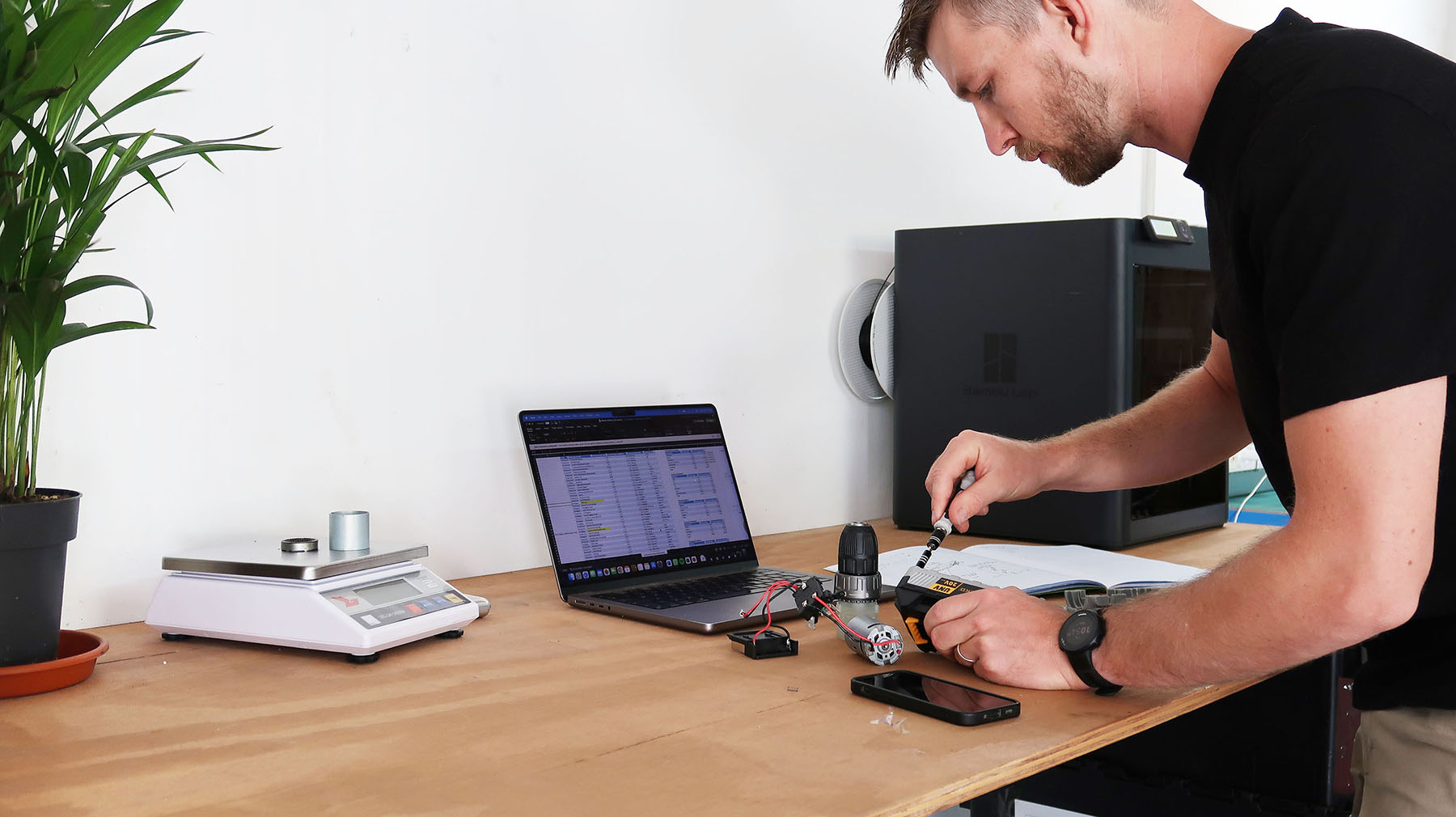
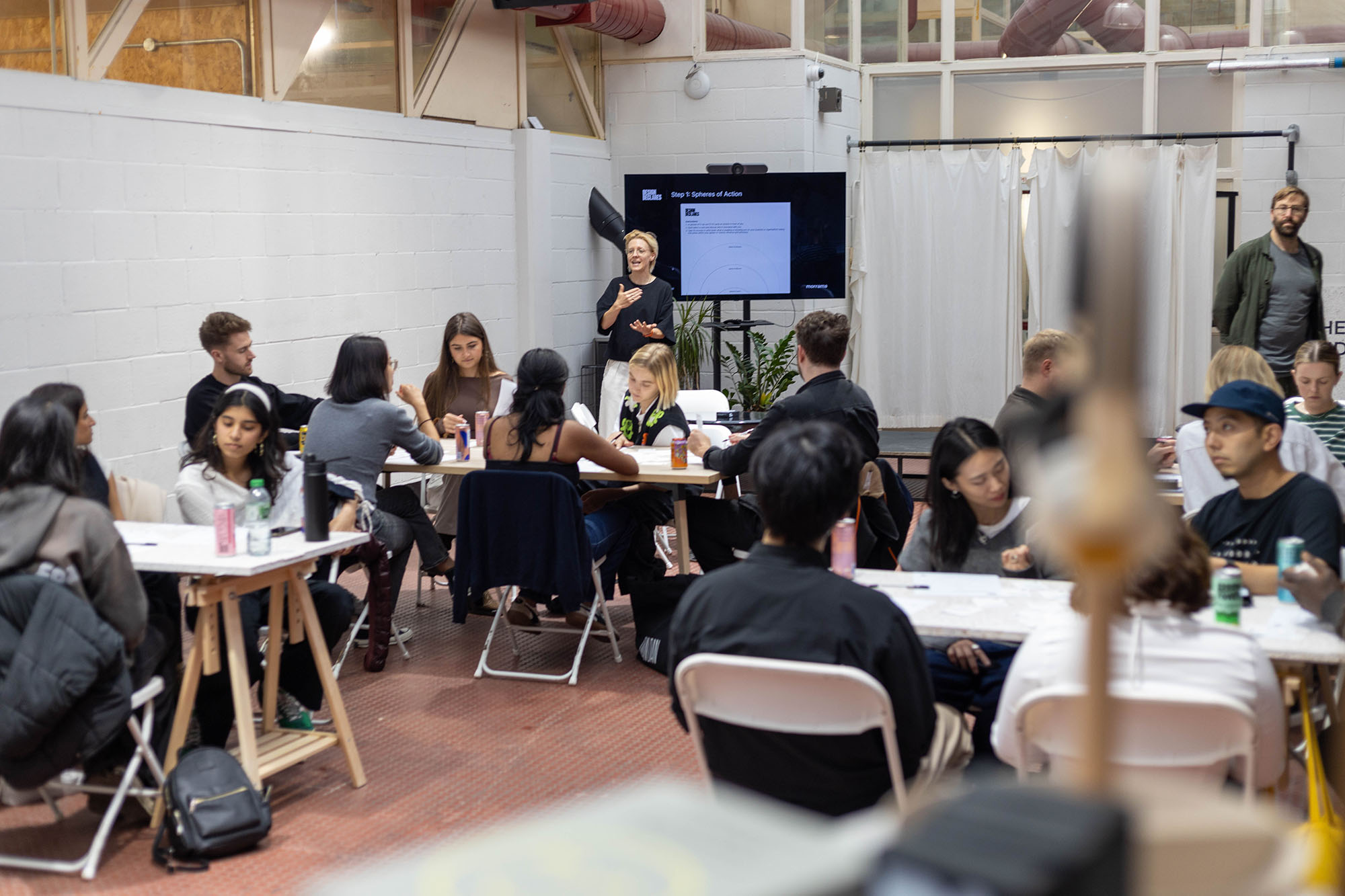
We’ve been fortunate to have Sam Dill, ex Sustainability Manager at Dyson, join us this month to share his knowledge and insights on sustainability in the design of electronics with the Morrama team.
Not wanting to keep everything to ourselves, we asked Sam if he would share some of his key insights and advice with you, lucky reader, and he said yes.
Hi Sam, thanks so much for agreeing to this. Can I start by asking you to summarise your previous role as Sustainability Manager at Dyson and what you are doing now?
Sure thing! At Dyson I worked across the product development process to help teams make more informed choices about the footprints of the things they were designing. I worked across the full product lifecycle - from supporting new material and technology development, all the way to visiting and mapping out refurbishment and recycling facilities. I then produced guidance, tools, and metrics that fed into Dyson’s sustainability milestones and helped tailor the product development process at a more strategic level. Over my 8 years I gained a good understanding of what is effective at instigating change in a global business - and a healthy dose of what isn’t!
More recently I’ve started up my own practice, to help empower businesses who make physical products understand their footprints and influence them early enough in the development process where change is still possible. This comes in the form of training to upskill designers, as well as slotting into existing teams as sustainability support.
During your career in design, what’s one thing that you’ve learned that challenged your previous assumptions around sustainability?
I think my biggest realisation has been that to make informed decisions on the footprint of products, you must understand the realities of the wider system. If we take recycling centers for electronic waste for example, the technical sorting limitations of these facilities dictate what will/won’t be recycled, and without knowledge of this it would be easy to obsess over product changes that won’t make a difference. Context is absolutely everything, and understanding this can be very complex, but also really illuminating.
If there were three key areas that you’d encourage designers to focus on in order to reduce the impact of their tech products, what would they be?
- Question a product’s features
In general, whilst small electricals are getting more energy efficient, the impact of their materials and manufacture is rising, due to increasingly complex electronics and intelligent features.
To counteract this, I would really question where intelligent features add value. Does this product offer any benefit to the customer by connecting to the cloud, having ‘smart’ features, or are these a distraction? If you are adding additional complexity, make sure it’s for a good reason, and not a feature that will render a product useless sooner.
- Design for longevity
Focus on ensuring products can be kept in circulation for as long as possible. For most small electronics, making devices last longer and negating complete replacement is a great way to reduce overall impact. Things will inevitably go wrong at some point, so how can you ensure that if it does, that the physical design of the product enables repair, and that systems exist to facilitate it. Too often, a small broken part like a hinge, catch or button renders an entire product useless thanks to a lack of ability to replace it, or a lack of infrastructure to get the parts required. This also paves the way to enable future product refurbishment. If you can, design the support system at the same time as the product. Companies like Fairphone are proving that this is possible, even in small, heavily integrated devices like earbuds, and companies like iFixit have great readily accessible resources to help designers think about this.
- Plan for end of life.
When products truly can’t continue to be used, make sure they get sent to the right place for recycling, and that they can actually be processed when they get there. E-waste is one of the world’s fastest growing waste streams, and currently over half of the electronics we throw away don’t make it into the recycling stream. Think about how you can influence this - whether through takeback schemes, communication campaigns, or trade in. When it comes to plastics, choose ones that are widely recycled in E-waste recycling, such as ABS, PP or HIPs, and avoid additional coatings and permanently bonded materials that impede recycling.
Obviously it would be great to do LCAs on all the products we design, but they are costly and only accurate if you can get the data. This is possible if you want to analyse a product already on the market, but much more challenging to integrate into the design process of something new. What other forms of measurement or comparison can be used earlier in the design process?
Regardless of access to LCA tools, I would encourage designers to employ lifecycle thinking from the get-go. Have an appreciation of how your concepts will be made - what sort of materials and manufacturing processes will be used, what tasks they will be performing, what technologies they use to achieve this (heating, cooling, spinning a motor), where they are likely to go wrong and where they will end up when they do. These are all vital bits of information to help you highlight where the majority of your footprint could lie. Be curious!
The first thing I do when working on a new concept is to roughly map out the proposed lifecycle of the product on paper, highlighting what I know, and what I don’t. I find if you think about it, you will be surprised how much you can surmise about the likely impact areas of a device from very early on and where you should focus your sustainability efforts. This relies on having a good understanding of materials and manufacturing processes, and there are a whole host of free resources to help clue you in on this, from youtube channels like Protolabs and Rapid Direct, through to MIT’s OpenCourseWare platform for Online Courses. A quick search or AI prompt of the manufacturing process you are interested in will get you understanding the basics of a process, and how wasteful it is.
If creating a lightweight LCA isn’t possible, I like to create decision matrixes when looking at concepts - which allows you to compare different materials and processes. Pulling information on weight, waste, ability for recycled content and ability to be recycled into a comparison chart helps guide decision making - and what questions to ask suppliers to fill in the blanks.
Another way to gain insight is to think about how your product is delivering its functions. Are there published LCA’s for a product that works in a similar way (albeit perhaps for an entirely different purpose) that you can learn from? Most electrical goods are not functioning in a way dissimilar to products already on the market, even if the use case is decidedly different.
Why are more products not designed for repair, refurbishment or recycling?
I think there are a few factors at play here. Naturally, most product manufacturers want to drive down costs, and in my experience, this can be very one dimensional. Companies can get fixated on the physical BOM and end up consolidating parts, using adhesives and single use snaps to reduce up front costs, without considering how this might influence downstream processes which may save the business money, or create new revenue potential in the long run. Opportunities such as reducing replacements in the warranty period, increasing customer retention through excellent customer service, and facilitating the re-sale of products as refurbished goods. With this mindset, solutions that enable activities like repair are often stripped out in the design process for fear of being too costly, and when revisited once the product has already been designed, cease to make economic sense.
A great case study that challenges this thinking is the recent design update of the Erbauer power tools. Designing for repair, all permanently soldered fixings were replaced with JST connectors meaning that customers could fully disassemble the tools. Making the products easier to disassemble, also made assembly simpler, reducing cost and cancelling out the additional price of the connectors.
How can people reach you if they feel they could benefit from your expertise on their business or projects?
Please feel free to connect and reach out to me on LinkedIn - or visit my website eneldo.biz where you can book a catch up in my diary directly.
The most effective starting point is lifecycle thinking — mapping out how a product will be made, used, repaired and disposed of, even at the concept stage. Prioritise designing for longevity and repairability, question whether smart features genuinely add value, and choose materials that are widely recycled in e-waste streams, such as ABS, PP or HIPS. You don't need a full LCA to make better decisions — decision matrices comparing materials on weight, waste, recycled content and recyclability can guide early-stage choices effectively.
Lifecycle thinking means considering a product's environmental footprint across every stage — from raw materials and manufacturing through to use, repair and end of life. It matters because the biggest impact reduction opportunities are often only available early in the design process, before tooling and specifications are locked in. Even without formal LCA software, designers can map out a product's proposed lifecycle on paper to identify where the majority of its footprint is likely to sit and where to focus effort.
Cost pressure is the main barrier. Manufacturers often focus narrowly on reducing the upfront bill of materials, using adhesives and permanent fixings that make products cheaper to assemble but impossible to repair. This overlooks the longer-term commercial benefits of repairability — fewer warranty replacements, stronger customer retention and revenue from refurbished resale. When repairability is considered from the outset rather than retrofitted, it can actually reduce costs by simplifying both disassembly and assembly.