Impact Report 25/26
TL;DR
- 29 clients, a new relationship with Logitech, and a strong awards year: DBA Design Effectiveness gold, Dezeen Sustainable Design of the Year, and a Dragons' Den offer for Kibu.
- Our measured carbon footprint is 29.58 tCO2e — higher than last year's figure because the scope is now much wider. Flights make up 81% of it.
- Nine of our eleven people gave 189 hours to the design community, and we've begun B Corp recertification.
Whilst running an agency is forever a rollercoaster, the past year was a particularly unpredictable one. But what has, as always, remained steady are our values. Proud of our B Corp status, we are currently going through the process of recertification - if anyone has done it, you will know it’s no mean feat - and look forward to sharing more on that over the next few months.
Now though, let’s take a look back at 2025-26.
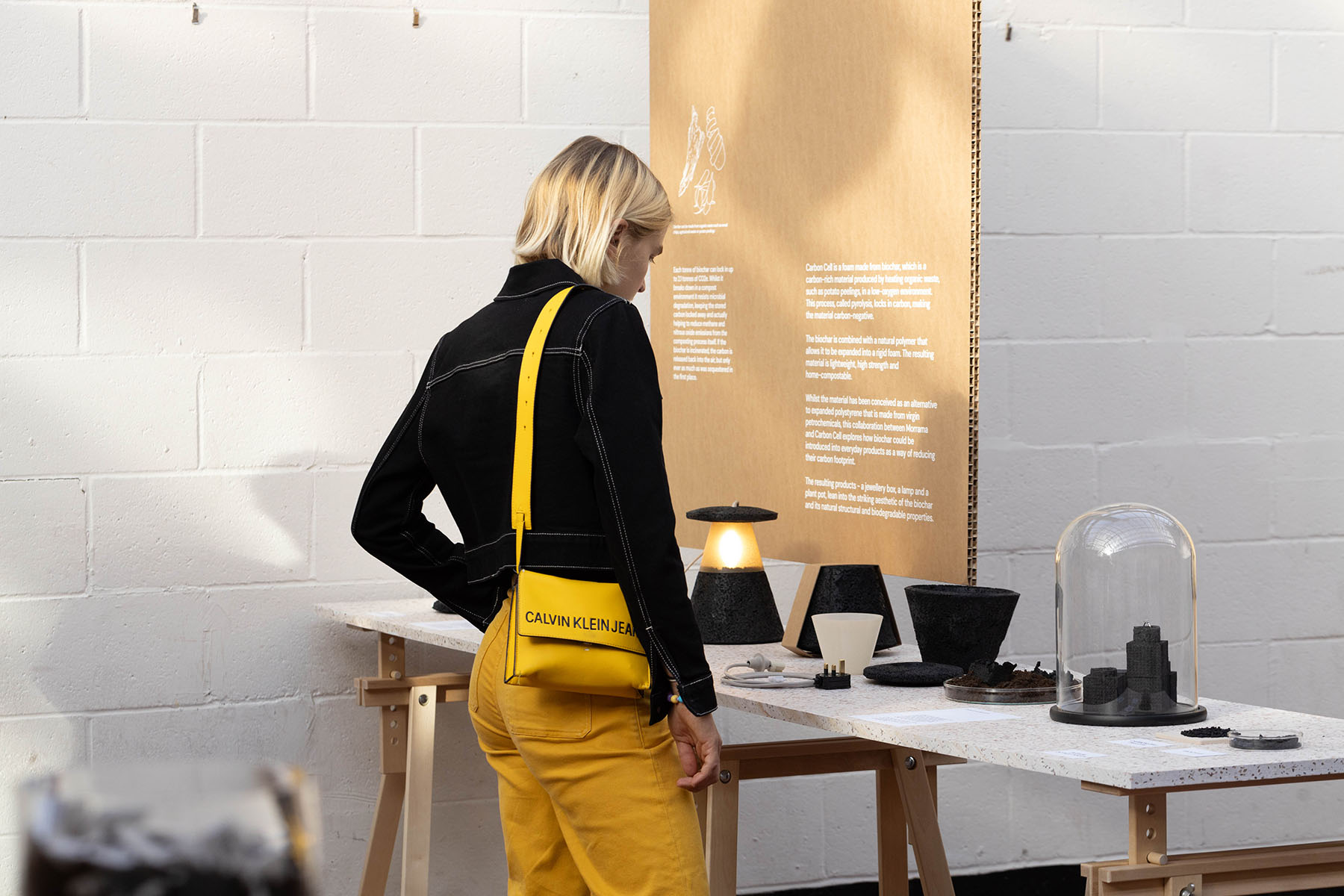
We worked with 29 clients in that time, deepening long-running relationships with Wild, Diageo and Mokobara, and starting many new ones, including an exciting collaboration with Logitech. It was a year focused on sustainable material innovation with our exhibition From the Ground Up at the London Design Festival ‘25 featuring collaborations with Earthmade, Carbon Cell, Pulpex and Shellworks.
In terms of reporting we’ve built out a more accurate measure of carbon usage within the studio that will act as a baseline moving forwards. Compared only with last year, it’s not flattering, but you can't responsibly design your way to a lower footprint if you haven't accurately measured the one you've got. We’ve also followed B Lab’s evidence requirements on equality and diversity, ethics and community involvement to build out this report.
We’ve always got work to do, but there is plenty to be proud of too.
What We Achieved
Partnerships & client work
- We worked with 29 clients across design strategy, industrial design, user experience, engineering and brand.
- We continued our relationship with Wild through its acquisition by Unilever, took on new projects with Indian luggage superstar Mokobara, and kicked off new projects in tech, home and wellbeing.
- Began an exciting relationship with Logitech as we shift away from packaging to focus on tech, sustainability and user experience.
Community impact
- We partnered with the environmental charity Hubbub to design and launch the Big Ballot Bin (more on this below).
Thought leadership
- Jo Barnard wrote articles on community building, AI in the creative industry, diversity in design and the impact of AI toys on kids (and adults) in publications including Dezeen, Dieline, Creative Bloq, the Indian Express, and Campaign India.
- Our London Design Festival exhibition, From The Ground Up, was covered by Luxury London, Livingetc, STIRworld, Dieline, Disegno and Icon.
Reputation
- A strong year for recognition across the board: multiple awards for Wild and Kibu, plus Jo Barnard's own Dezeen Bentley Lighthouse Award win.
This year the question of B Corp recertification came up. It’s a big job and we are a small team with limited resources. But if the only reason we gave for not going through the process is that we don’t have time, then what sort of example are we setting. Time is fluid and energy makes it expand. And it’s this energy that we want to grow and channel into more meaningful, community and societal focused efforts this year. Design is an incredible tool and we need to be using it for the good of people and the planet.
- Jo Barnard, Founder
A summary of success
- The Wild refillable roll-on deodorant launched with coverage across Packaging Europe, Packaging News, Packaging Solutions, The Grocer and Retail Times, and sales exceeding expectations.
- Kibu: named to Dezeen's top 10 gadgets of 2025, secured a Dragons' Den investment offer from Peter Jones and Jenna Meek, and named favourite in The Independent's kids' headphones roundup.
- We won gold at the DBA Design Effectiveness Awards 2026, were winners of Dezeen’s Sustainable Design of the Year 2025, picked up double gold at the Better Future World Design Awards 2026, and are shortlisted for a D&AD Pencil Award in Product Design and Dezeen Awards' Consumer and Sustainable Design.
- Alight, a conceptual device, picked up a Dezeen feature plus featuring on trend blogs like Design Burger with an exhibition of the project planned in China later this year.
Debrief & project Spotlight: The Big Ballot Bin
This year's spotlight is the Big Ballot Bin, designed with the environmental charity Hubbub to make putting rubbish in the bin something people actually want to do. Unlike traditional bins the Big Ballot Bin lets people “vote” with their litter, dropping it into one of two chutes to answer a question, with the tally displayed in real time on a low-power flip-dot screen.
It's a small piece of behavioural design solving a real problem: litter doesn't reduce itself, and most anti-litter campaigns rely on people already wanting to be tidy. This one makes tidiness a bit of fun instead.
2.5x more litter captured than a standard bin, verified through independent testing by Elipsus Earth
The 2025 version, led by Lucy Williams, Ben Melvin and Jo Barnard, builds on a 2023 prototype and was redesigned for real-world durability and repairability: a mild steel body with a powder-coat finish, anti-vandalism film over the screen, modular components that can be repaired or replaced individually rather than binning the whole unit. The sloping top was designed to stop “tidy littering” - people neatly stacking rubbish on top instead of posting it through. It was prototyped in the UK and tested at Manchester Arena in 2025, with a wider rollout to follow.
Carbon Footprint
Our carbon footprint this year is 29.58 tCO2e
Last year we reported 13.53 tonnes (1.23 tonnes per person) but based on a narrower scope. We’ve since widened the scope and include electricity, flights, commuting, business travel and waste. This will be our baseline moving forwards.
We have a renewable tariff, but we know it’s never 100% so have taken realistic location-based grid-averages to come to the figure of 29.58 tonnes CO2e across the year. This works out at 2.69 tonnes per person.
Flights are 81% of our entire footprint: 24.02 tonnes, almost all of it long-haul return trips to the Far East for factory visits. Studio electricity is 3.43 tonnes. Everything else, commuting, rail, waste, comes to under two tonnes combined.
This figure excludes home-working energy, studio gas (not separately metered), water, purchased goods and services, IT hardware, prototyping and model-making materials, shipping and couriers, and hotel nights, none of which were surveyed this year. We know these account for only a small portion of the total and are more difficult to calculate, so we are focusing on the numbers we can reliably capture so that we have accurate comparisons year on year.
The job now is to understand where changes can be made while maintaining good services for our partners and keeping the team happy. We are in a strong position already, sitting at the lower end of the 2-10 tCO2e average carbon footprint for a service business such as ours.
Innovation, Community, Culture & Team
271 hours...
given to the design community this year by 9 of our 11 people: mentoring, teaching, portfolio reviews, award judging, university lectures, and a stint volunteering at a SUEZ reuse facility, sorting and repairing unwanted products for resale
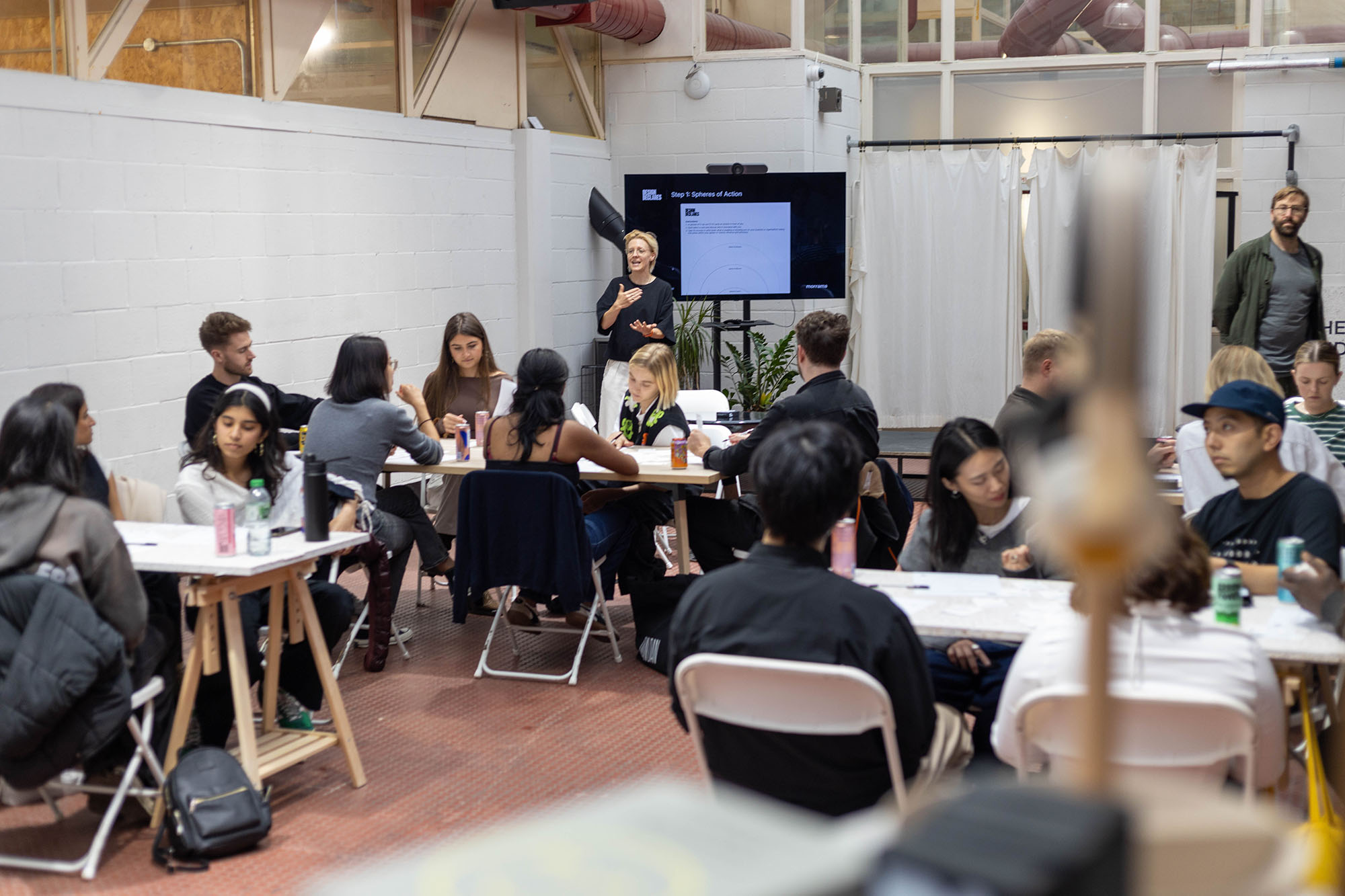
Nine of our eleven people gave time to the design community this year and Morrama supported this through giving working time, introductions or funding rather than asking people to give up their own.
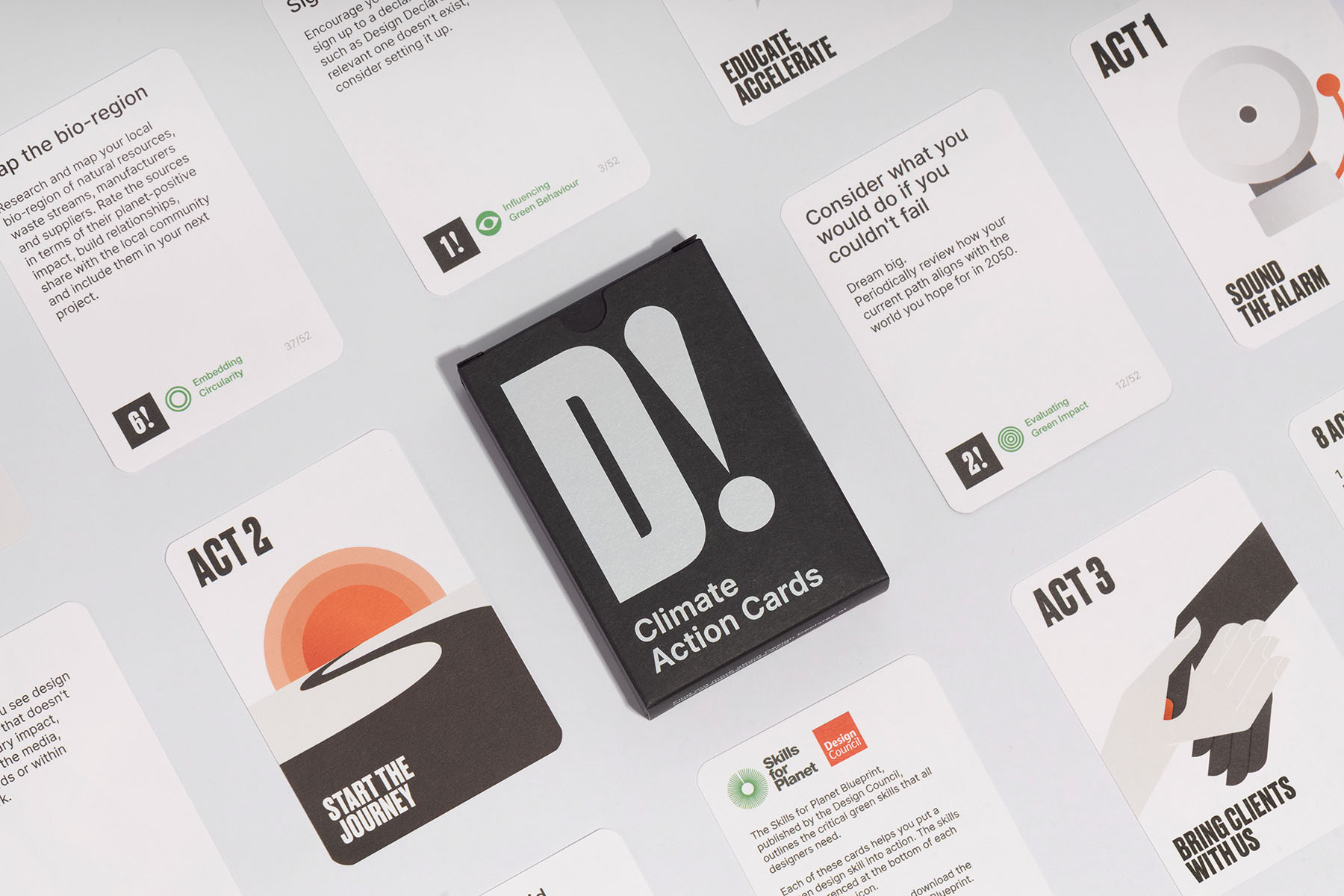
The largest single contribution went to Design Declares, where we spent 117 hours launching the Climate Action Cards at the World Design Congress, running events across design disciplines, building out a research project, initiating a rebrand and website rebuild, and setting up monthly design-therapy sessions for the non-profit.
A diverse team
A team of 11, 6 women and 5 men with diverse nationalities and LGBTQ+ representation, we've decided not to publish a finer breakdown because our our size it would identify specific people. We also didn't track training hours formally this year - fixing that is on the list for next year - but over 200 hours were spent on courses, at conferences, attending workshops and working on self-initiated projects.
Innovation
The most significant shift in our business approach sits on our AI page. Our position there is that AI won't be won in the cloud. It will be won in the hands, homes and habits of the people using it. We see our job as designing the physical interface between human and AI: the tangible layer where intelligent products actually meet daily life, rather than a purely digital or technical problem.
Our concept Alight is the clearest expression of that so far, using AI to facilitate resilience through familial connection. It sits alongside our continuing work on mindful AI tools for children and at-home health monitoring, different applications of the same underlying view: that AI succeeds or fails on how thoughtfully it's designed into physical products, not on how capable the model behind it is.
Next Steps
Benchmarked against the industry average, and as a small team, Morrama is a small-footprint business. But alongside monitoring and reducing our carbon where possible, we want to focus on increasing our positive impact. To measure and incentivise this, we will start tracking engagement and training hours properly, so next year's numbers are measured rather than estimated. And we'll take what we learned from Design Declares and this year's community work and turn it into a clearer answer to a question we're increasingly asking ourselves: how does a studio our size best support emerging designers, both out of university and perhaps even before?
It hasn't, really - the measurement changed. Last year's 13.53 tonnes came from a much narrower scope. This year's 29.58 tonnes includes electricity, flights, commuting, business travel and waste, which gives us a baseline we can actually compare against year on year. It still sits at the lower end of the 2–10 tCO2e range typical for a service business of our size.
They're 24.02 tonnes of the total, almost entirely long-haul returns to the Far East for factory visits — the single biggest thing we could change, and the hardest. The work this year is figuring out where we can cut without compromising what we deliver for clients or how the team works. We can't promise it will reduce because 4 trips to China across 29 projects is really very little, but we will work out a way we can weight up the benefit vs the impact of each trip.
A bin designed with the charity Hubbub that lets people vote with their litter, posting it into one of two chutes to answer a question, with a live tally on a low-power flip-dot screen. Independent testing by Elipsus Earth found it captured 2.5x more litter than a standard bin. It was tested at Manchester Arena in 2025, with a wider rollout to follow.