We've spent 20 years designing friction out of our lives, AI will show us what that costs.
TLDR
- Human-centred design was meant to serve people. In digital products, "seamless" and "intuitive" came to serve tech companies instead, measured in our time and attention.
- AI could take convenience to its limit, with homes and products that decide everything for us. Remove all the friction and you also remove choice, surprise, connection and the feeling of being present in your own life.
- The opportunity for designers is to build AI products that handle the background tasks and leave the meaningful decisions to people. Design the conditions for good moments rather than trying to engineer the moments themselves.
In the 90s, U.S. design studio IDEO came to fame selling the idea of human-centred design. They engaged companies with the premise that if they put people at the heart of the design process, their products would be more successful. And big businesses paid big bucks for it. As an industrial design student 20 years later, human-centred design was baked into the program. We studied ergonomics - how humans move and think, and anthropometrics - human shape and size, aiming to create products that people could use seamlessly and intuitively, without friction.
In designing physical products, those constraints are real: a handle too big for a hand, a button too stiff, a chair too deep. In the design of digital products, there are fewer such constraints and instead the success of a product has become measured in time and attention. The words stayed the same - intuitive, seamless, user-centric - but they stopped serving the person and started serving the tech company. With cookies tracking our movements online, collecting our data and keeping us engaged, spending and scrolling, all in the name of convenience. Convenience, as legal scholar Tim Wu wrote in The Tyranny of Convenience, is one of the most underestimated forces shaping modern life. Over time, we've allowed it to influence almost everything we do.
Now with the advent of AI, we enter a world where an intelligent system can build up such a complete picture of us it can appear to know what we need better than we can. With wearables monitoring heart rate, body temperature and blood pressure, our smartphones tracking our interests and AI chatbots picking up indicators of desire and happiness in our conversations, we enter an era where the environments and products around us will have the capabilities to respond and adapt to our needs without a second’s thought.
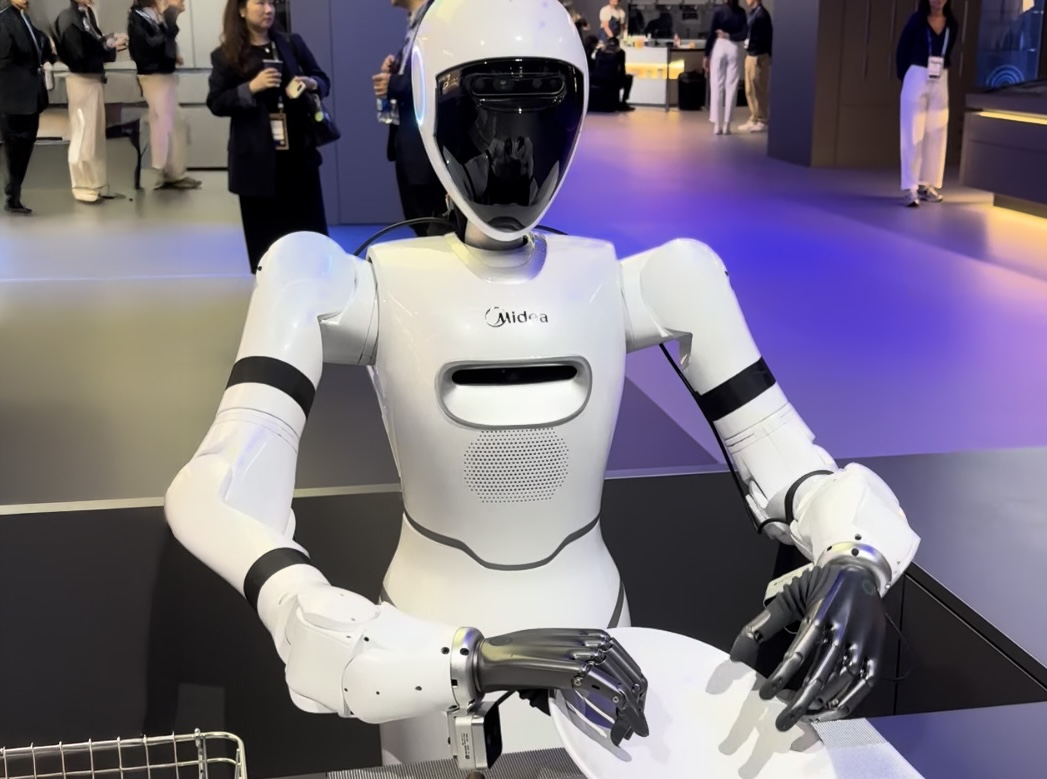
Imagine a world where you could just arrive home, change into something comfortable without worrying about putting your laundry in the wash - your AI robot will sort that; there is a juice waiting for you that replenishes the nutrients you didn’t know you needed; the lighting and music in your living room set to balance your energy levels; a movie on the screen and a meal on order from a local takeaway selected for you based on your conversations that day.
Magic right?
Except you didn’t pick the juice. You didn’t choose the film, or notice the lights change, or work out what you actually fancied to eat. Something listened to your whole day and decided for you. And it was easier. But at what point in any of this did you have to think for yourself? To want something, choose it, get it wrong, be surprised? Strip the friction all the way out and you don’t get freedom. You get a very comfortable room with no one really in it.
This push towards what some see as utopia, connecting up our lives so our personal AI relieves that decision fatigue - ironically also a product of the convenience economy - is also taking away something much more fundamental.
Friction-maxxing
In January 2026 in a piece titled "In 2026, We Are Friction-Maxxing," Kathryn Jezer-Morton introduced the term to describe the practice of intentionally choosing less convenient options in daily life to build tolerance for discomfort, resist technology-driven ease, and preserve meaningful human experience. She urges us to call the restaurant and connect with the human on the other end instead of booking online; become more mindful of your surroundings by relying on road signs rather than a maps app; find joy in unexpected places by allowing yourself to get it wrong. The idea immediately went viral with features everywhere from Forbes to the BBC. It resonated with people, and it’s easy to see why. When my child was little I would have to call up restaurants to find out if they had a high chair - something you can’t find out easily online. It struck me as ridiculous how unfamiliar it was to pick up the phone, but, once I’d finally got round to it, how I looked forward to the dining experience more having connected with someone there.
Giving up on mindfulness, human connection and opportunity for unexpected joy is the price we pay for a conveniently optimised life. Sociologist Hartmut Rosa frames this experience as resonance. A mode of relating to the world where something calls to us in some way, we respond, and both sides are changed by the exchange. Rosa stresses the need to recognise the “uncontrollability” of what goes on. Rosa’s argument is that resonance with the world only happens with things we can't fully control. The frictionless smart home is, by definition, resonance-proof. Everything is controlled by algorithms and predictions to create the perfect experience, and yet the result feels hollow.
The question is, can we design in friction that creates these opportunities for resonance, or by attempting to engineer it, to control it, does it disappear?
Designing the conditions, not the experience
The benefit of AI is that it learns and adapts and provides a unique experience to every individual. AI products are therefore, arguably, ripe for those seemingly “uncontrolled” experiences that Rosa touches on. Spotify Discover Weekly genuinely does introduce people to music they would have unlikely found themselves. But when they then only listen to those recommendations, and it’s those tracks that form the basis of the next set of recommendations, then an echo chamber is formed and the playlist becomes mundane.
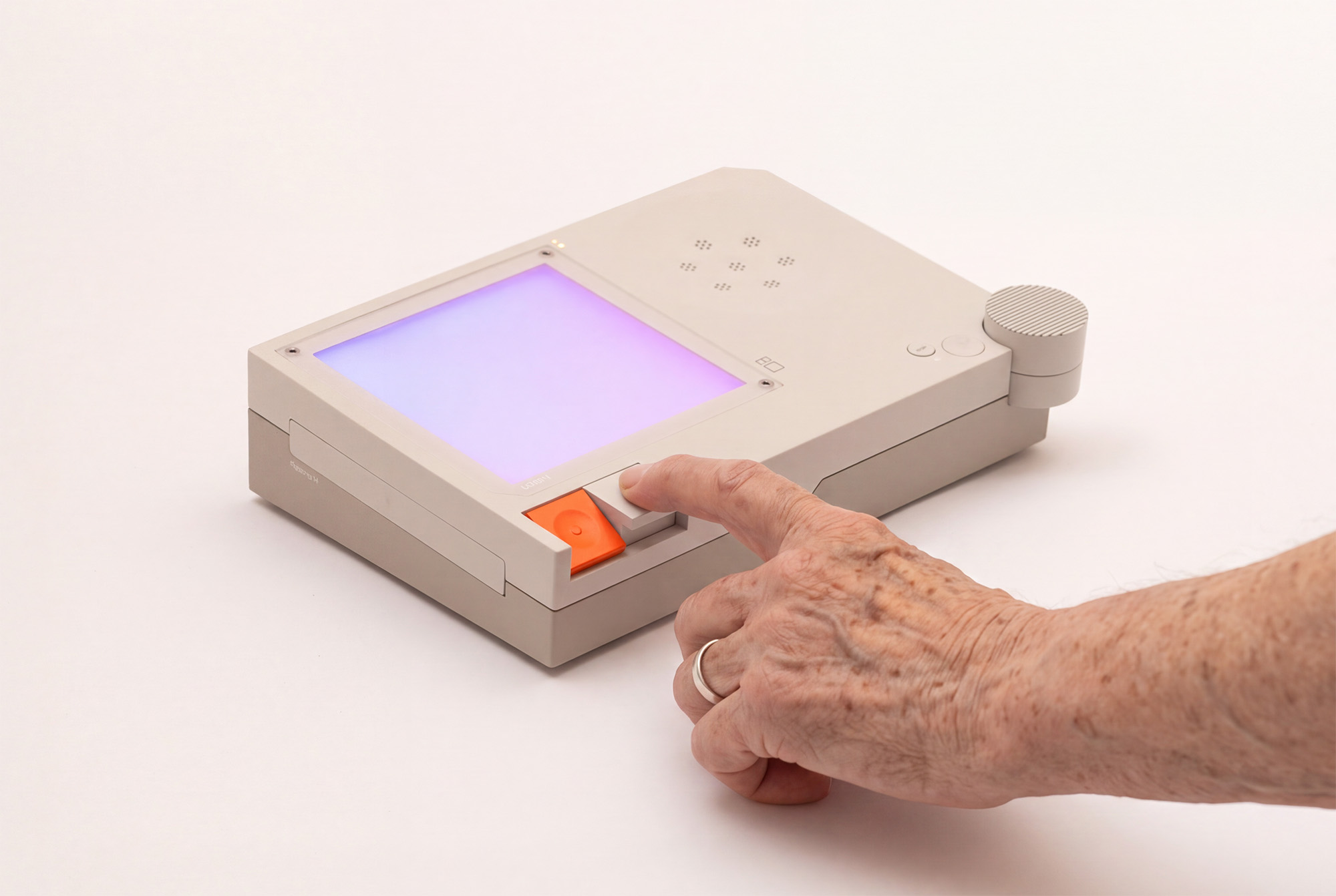
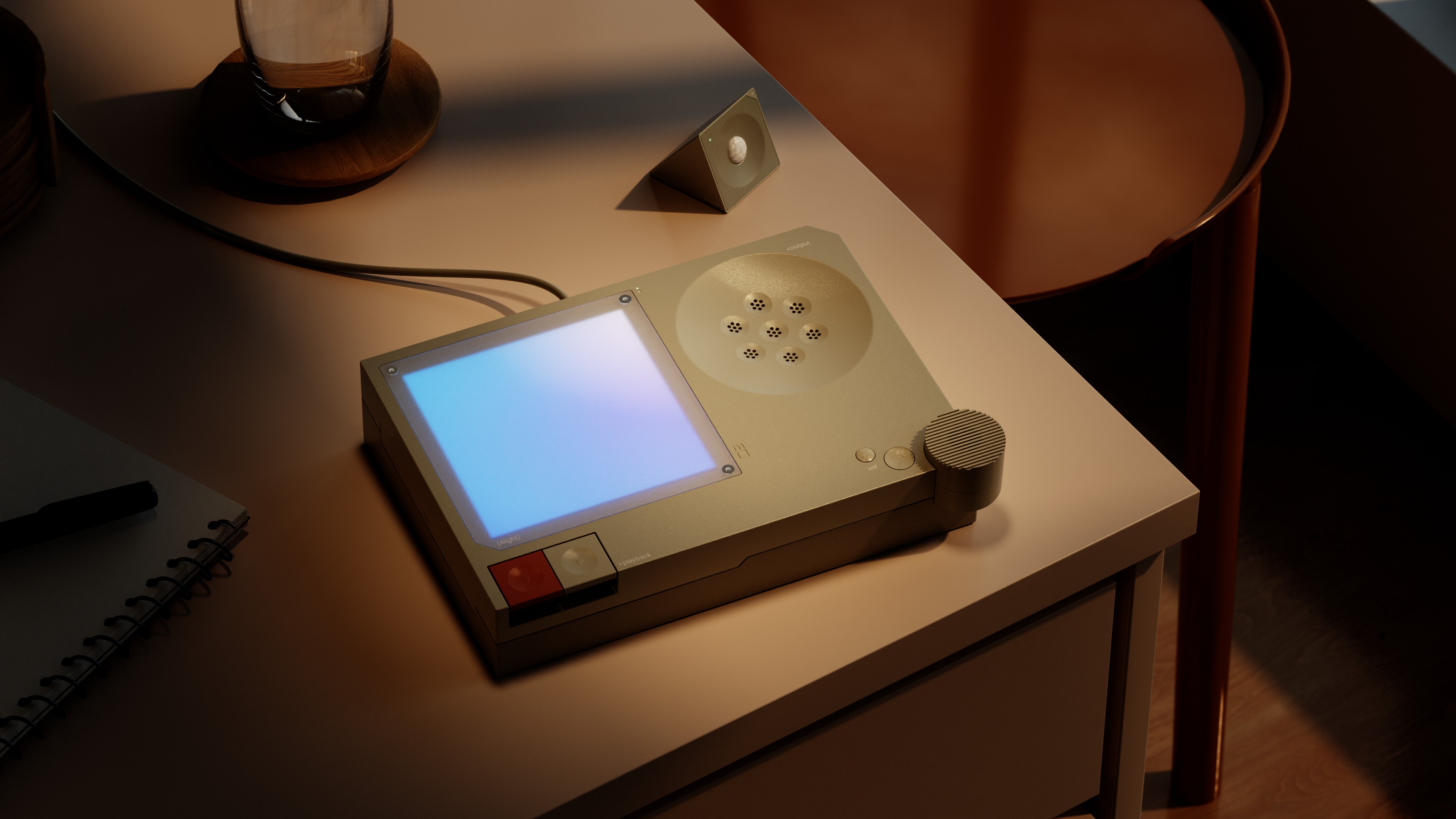
Exploring family connection in a recent project, and feeling uncomfortable with the rise in grief-tech companies creating digital replicas of a loved one upon their death, we designed ‘Alight’. Inspired by a traditional answer phone machine, Alight uses light as a nudge to make that phone call to your family member, allowing you to record key conversations and storing them in that raw un-edited format to be intelligently searched through like a photo album. Those genuine conversations and the memories attached hold more value than any granny chatbot could because they are complete with unpredictable moments. The recording where you accidentally trod on the cat, the time your grandpa was in hospital, the conversation where your gran laughed so much she wet herself.
It’s designing the conditions for meaningful moments to happen rather than attempting to design the experience itself that is key.
Attention and agency
As AI tools and products move out from our phones and computers and take physical form in our homes and lives, we are presented with an opportunity as designers.
When I think about two objects that I love in my own home I think of the record player and the projector. The record player because it’s so much more than a way of playing music, it’s about the memories and meaning attached to each record. And the projector because it’s a beautifully designed object that satisfyingly folds away and makes each decision to watch tv a deliberate act. These objects engage me on an emotional level and deliver an experience that I’m fully conscious of. By contrast the frictionless picture painted at the beginning of the article enables one to drift through time without any real awareness, without any reason to think.
Taking inspiration from these experiences as we design the next wave of AI hardware, we must seek not to remove friction, but to strive to create opportunity for those unexpected moments that bring awareness and joy. We need to be asking not “how do people use things?” but instead “what do things do to people?”.
Putting the human back in human-centred
Imagine a world where you arrive home and change into something comfortable, putting a wash on yourself because it took 90 seconds and your grandmother taught you to care for the things you own. The wash cycle tailors to the load to reduce water use. Alight reminds you that you’d made plans to call your mum and you end up discussing her holiday in the 90s to Thailand. You get a craving for Thai food, so you ask your AI companion how to make a Pad Thai. It recommends an Asian supermarket in town that you haven’t been to where you can get the ingredients and tells you the opening times for the weekend and you set a reminder to go. You put on that record you bought from a man at the market who said it was his favourite African artist. You aren’t convinced, but perhaps it will grow on you.
In this scenario, technology is still present at every step, but it handles only the quiet background tasks, handing the decision making back to you and encouraging rather than removing those moments of connection with the world around. This is what human-centred AI tech looks like, products that make life more rich, more unpredictable, more human.
References
- Tim Wu, The Tyranny of Convenience, The New York Times, 2018.
- Kathryn Jezer-Morton, In 2026, We Are Friction-Maxxing, The Cut, 2026.
- Hartmut Rosa, Resonance: A Sociology of Our Relationship to the World, Polity Press.
It's a term coined by writer Kathryn Jezer-Morton in January 2026. It means deliberately choosing the less convenient option, like phoning a restaurant instead of booking online or following road signs instead of a maps app. The point is to stay present, connect with other people and leave room for the unexpected.
Technology that doesn't remove every opportunity for the unexpected. Alight, a concept Morrama designed, is one example. Instead of building a chatbot replica of a loved one, it nudges you to call your family and keeps those real conversations as they happened. The better question for designers isn't "how do people use things?" It's "what do things do to people?