Why hardware is the new moat
TL;DR
• Software differentiation is collapsing — a team of three now builds what once took fifty.
• Hardware is becoming the new moat: proprietary data and the physical layer are where value now lives.
• The design challenge: making AI hardware trustworthy, manufacturable, and capable of evolving with the people who use it.
Hardware becomes the new moat
In February 2026, AI advances triggered a mass sell-off of tech stocks in an event dubbed the Saaspocalypse. The premise is that with software so quick, easy and low-cost to build SaaS businesses (Software as a service) are under threat. Whilst there are still those who believe that the panic is just that, panic, and truly robust software products cannot be vibe coded into existence, we are seeing new products and services gain serious traction with a fraction of the investment. For example Upscrolled, a social media platform that went from 0 to 2 million users in a matter of months with just a single employee.
In the 1980s and 90s, hardware was the business. IBM, Sun, Compaq, Nokia, Sony, Dell, HP competed on specs, manufacturing quality, industrial design and supply chain. Software was often bundled in as a cost of selling the product. Then the margins on hardware compressed, and the companies that survived did so by leaning into software and services. IBM pivoted to services. Apple launched iTunes, then iOS, then the App Store. Nokia, Sony Ericsson, Motorola lost because they didn’t make that leap. Tesla is a car company that thinks of itself as a software company. John Deere makes more margin on software subscriptions than on tractors.
Now it’s reversing. A team of three can now build what took fifty people five years ago and so the ability for a company to differentiate at the software layer alone is eroding. Software brands now seek that extra layer that brings value and differentiation in two places: proprietary data and the physical layer.
What AI hardware means for humans
If the race is on to own the physical layer and embed sensors in homes, bodies, cars, classrooms, workplaces, then the incentive to capture data from humans will be greater than it has ever been. We’ve seen what happens when that incentive is left unchecked. The past fifteen years of software gave us attention economies, dark patterns, and surveillance capitalism. A race for data captured via hardware can do much worse. Screens at least require you to look at them. A sensor does not.
This is the risk. Hardware that captures without consent, devices that nudge without disclosure, products that optimise for engagement at the expense of the person using them — these become the default outcome if we are not deliberate. It’s an argument for another day as to whether the inevitability of the complete breakdown of privacy is avoidable or not, but right now people want to know if they are being watched, filmed, tracked. And in the conversations we are having, the most switched on businesses are baking trust into the design brief from the beginning.

What AI hardware means for design
Aside from the human question, designing AI hardware has some unique challenges and opportunities.
1. The changing interface: from screens to sensors
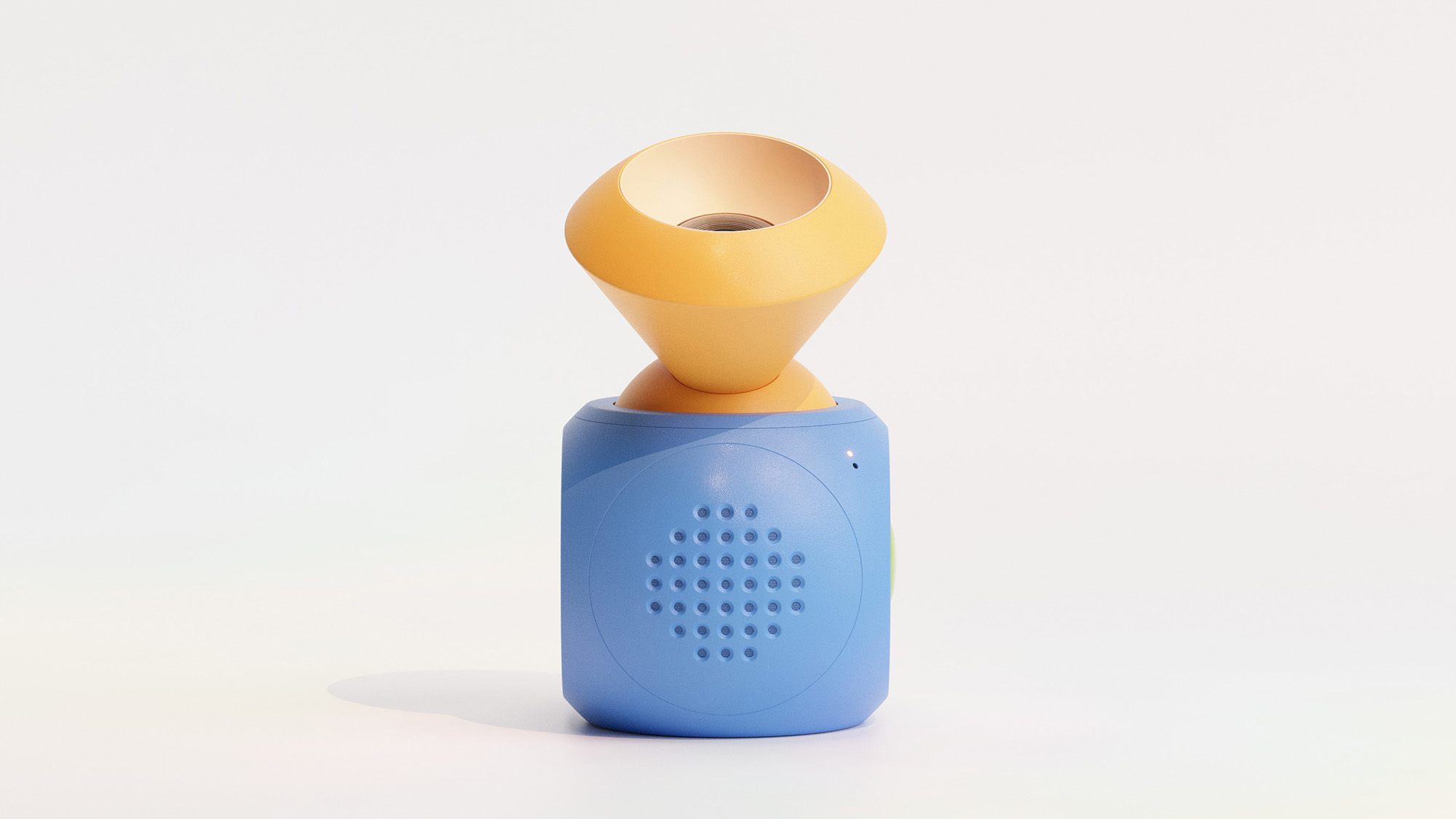
The design of this ‘New Wave Hardware’ needs to focus on two things; context and human behaviour. Moving from the deliberate decision to engage with a screen to interacting, or rather not needing to interact, with an object that sits quietly in a room, listens and responds when needed — this requires a change in approach to design.
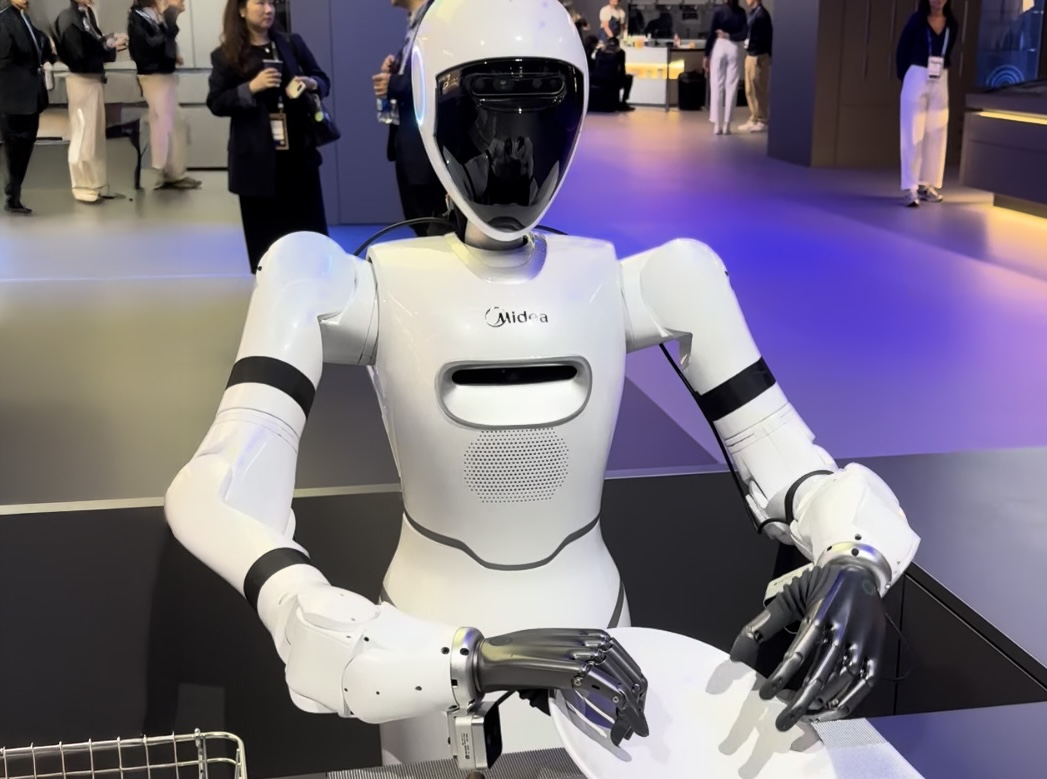
Without a screen, the hardware becomes even more important. How a material feels, a light glows, a button clicks, a voice sounds — these are not decoration, they are the interaction. The big tech companies know it, hence why OpenAI have partnered with Jony Ive and Meta is racing into wearables. But as with the design of any physical product, form and function must be dictated by where the product is used and who is using it. You only have to watch the crazy robot race that is playing out to see how varied an approach there is, from the technicoloured Abi from Andromeda to the soft, friendly face of NEO. But it’ll be the teams that have drilled down into a niche, understood the context and the user and designed for them, rather than for everyone, that will succeed.
2. The rising cost of hardware
The cost of building software has plummeted, but the price of hardware is only going up. The current ‘RAMageddon’ — journalists love an end-of-the-world play on words it seems — is set to last into 2028. In layman’s terms, the AI race has caused a shortage of memory chips, meaning these components are up to 10× more expensive. And it’s not just chips. Global conflict pushes up oil prices meaning raw materials such as plastics are higher too.
Designing with consideration for manufacturing, components and sustainable supply chains from the beginning is no longer a nice-to-have, it’s a necessity for any software company moving into hardware. The increasing Bill of Materials (BOM) will undoubtedly be a hurdle that many startups in particular will not be able to pass.
3. Designing for relationship, not transaction
Providing the costs work out however, there is one final area that we see as being key to the design brief. How do we design products that evolve?
An intelligent device that learns and develops over time means the product you ship in year one isn’t the product the user has in year three. So how do we design objects that grow with the person? That consider the evolving relationship between human and device? This adds a new dimension to the design brief that we are excited to explore.
The work ahead
We’re at the start of the cycle turning. The intersection of hardware and AI is exciting and, as with any new opportunity, there will be an initial rush into the market with new products competing for attention.
Most of them will be forgettable, or be best left as an app. But a small number will be worth the materials they’re made of - products that earn their place on the planet, in people’s lives, and in the unfolding relationship between humans and intelligent systems.
Morrama wants to work with that small number. If that’s you, get in touch.
Software differentiation is collapsing — a team of three can now build what once took fifty, and products like Upscrolled have shown a single founder can reach two million users in months. As the software layer commoditises, value is moving to the two places that remain defensible: proprietary data and the physical layer. Hardware is becoming the new moat because it's where trust, context, and the relationship with the user are designed in.
Three challenges define the brief. First, the interface is shifting from screens to sensors, which means materials, light, sound, and tactility carry the interaction rather than a UI. Second, component costs are rising sharply — the current memory chip shortage ("RAMageddon") has pushed prices up to 10× and is expected to last into 2028, making design for manufacture and sustainable supply chains a necessity. Third, AI hardware learns and evolves, so designers have to think about how an object grows with its user over years, not just how it looks on day one.
Unlike screens, sensors don't require you to look at them — which makes consent, disclosure, and legibility a design problem, not a legal afterthought. The most thoughtful businesses are baking trust into the design brief from the start: making it clear when a device is listening, recording, or transmitting, and designing physical signals (lights, materials, controls) that tell the user what the product is doing. Without this, AI hardware risks repeating the surveillance-capitalism patterns of the last fifteen years, only worse.