
Alight
An AI device built not for data capture, but for human connection.
Stemming from an internal research project into resilience and the importance of intergenerational story telling, this concept project explores the importance of human connection and consent - both of which are being challenged by the development and adoption of AI technology.
For the first time in history, we have the tools to digitally replicate not just what someone looked like, but the stories they told and the way they spoke. This can be a seductive method of preserving our loved ones, but risks forgoing authentic, real-world connections.
- JO BARNARD, FOUNDER, MORRAMA
In a previous article we discussed how the more young people know about their family history, the more resilient they become. Family stories, particularly those from our elders, act as a rehearsal for life, teaching us how to weather hardships - of growing importance in an era of chronic mental health concerns and an increasingly unstable world.
Exploring how design might offer an intervention we focused on one thing: that the hard part is rarely the desire to stay close. It is finding the moment. Alight is an object designed for that problem.
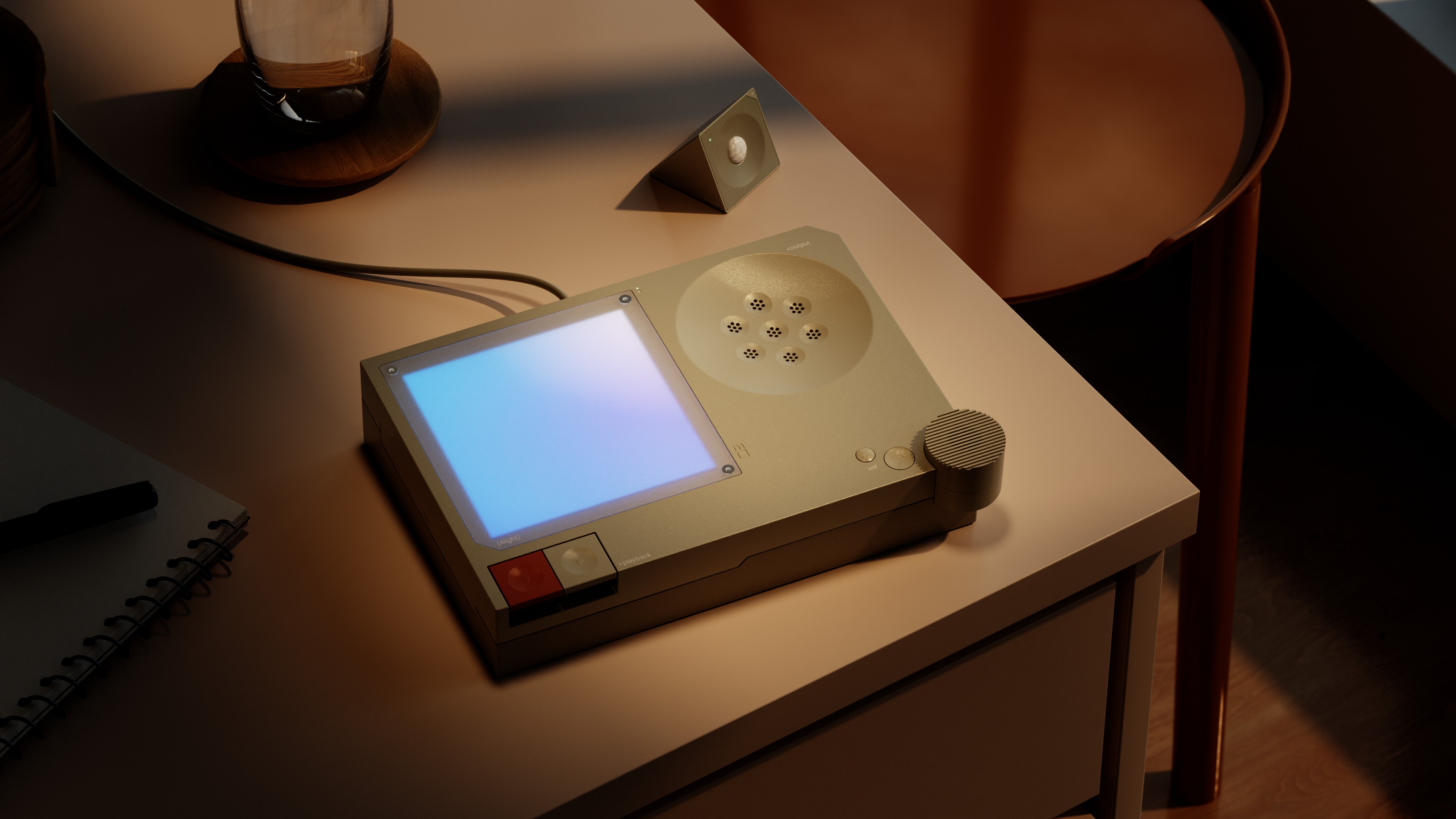
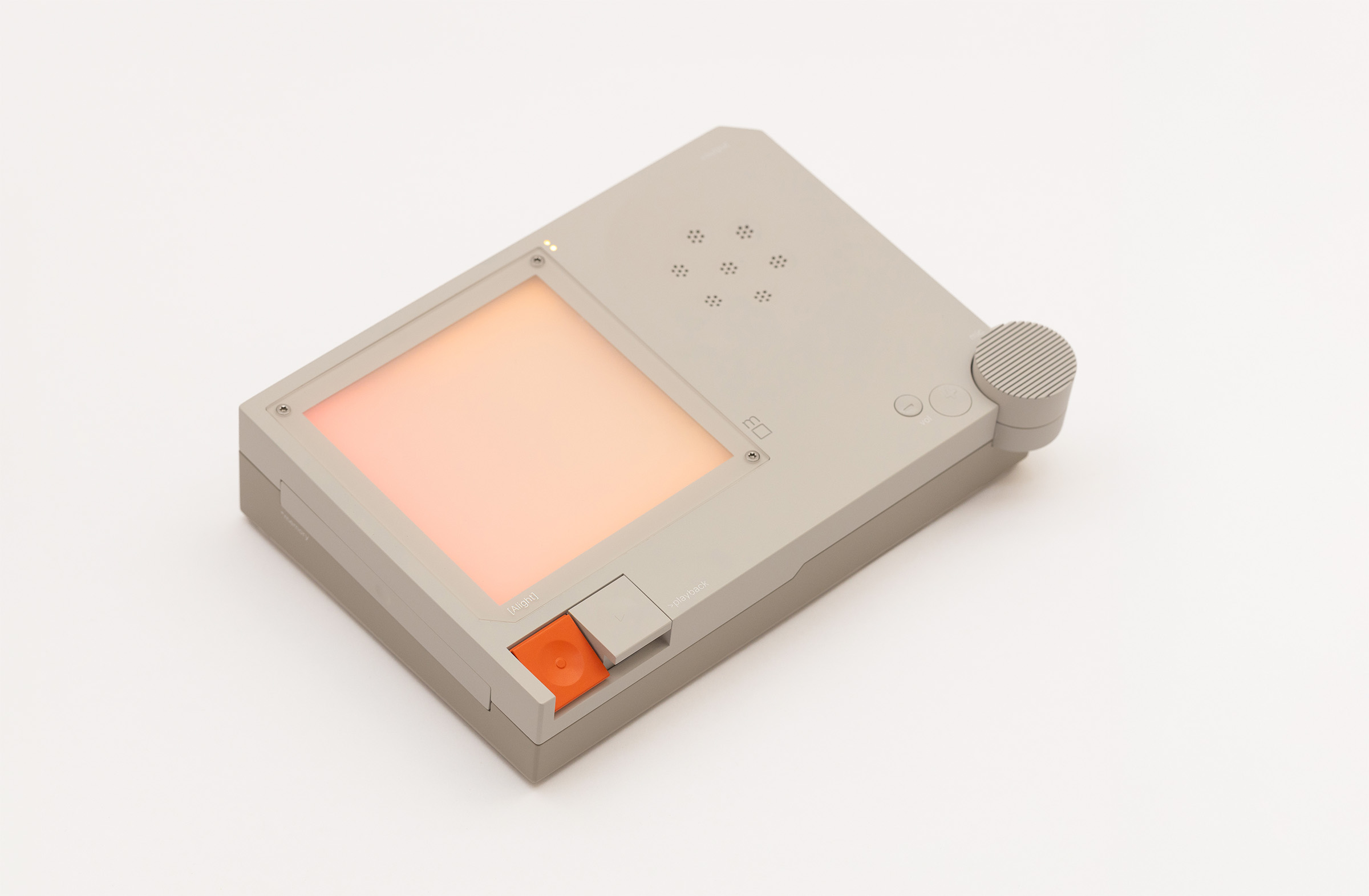
Deliberately designed to echo a once-familiar household staple, the tape recorder — a device that once captured family moments, supported learning, and sat at the heart of domestic life — Alight is an AI-powered device built not for data, but for connection. Its premise is disarmingly simple: the hardest part of staying close to the people we love is rarely the desire. It is finding the moment.
Seeing that the lights are on
Alight solves for that. Satellite units track movement in the living room, paired with calendar scheduling, to identify when the people you love are free and present. Rather than another notification on a screen, it signals through light. Each family member has their own colour, a soft blue for Mum, a warm green for Granny. A gentle glow tells you they are settled and at home, the same quiet reassurance as driving past a house and seeing the lights are on. Calls can be made device to device, or to a phone. There is no need to introduce new technology to those who may struggle to adapt.
There is a quiet case for voice, too. Research from Yale’s Michael Kraus found that people read others’ emotions more accurately from voice alone than from video — the absence of a face seems to make us listen harder. Voice also strips away the friction of a screen: no image of yourself to manage, less to distract you, nothing to do but talk and listen. Alight is designed around that, removing the friction of screens and notifications to create the conditions for something rarer: a real conversation.
When a conversation is worth keeping
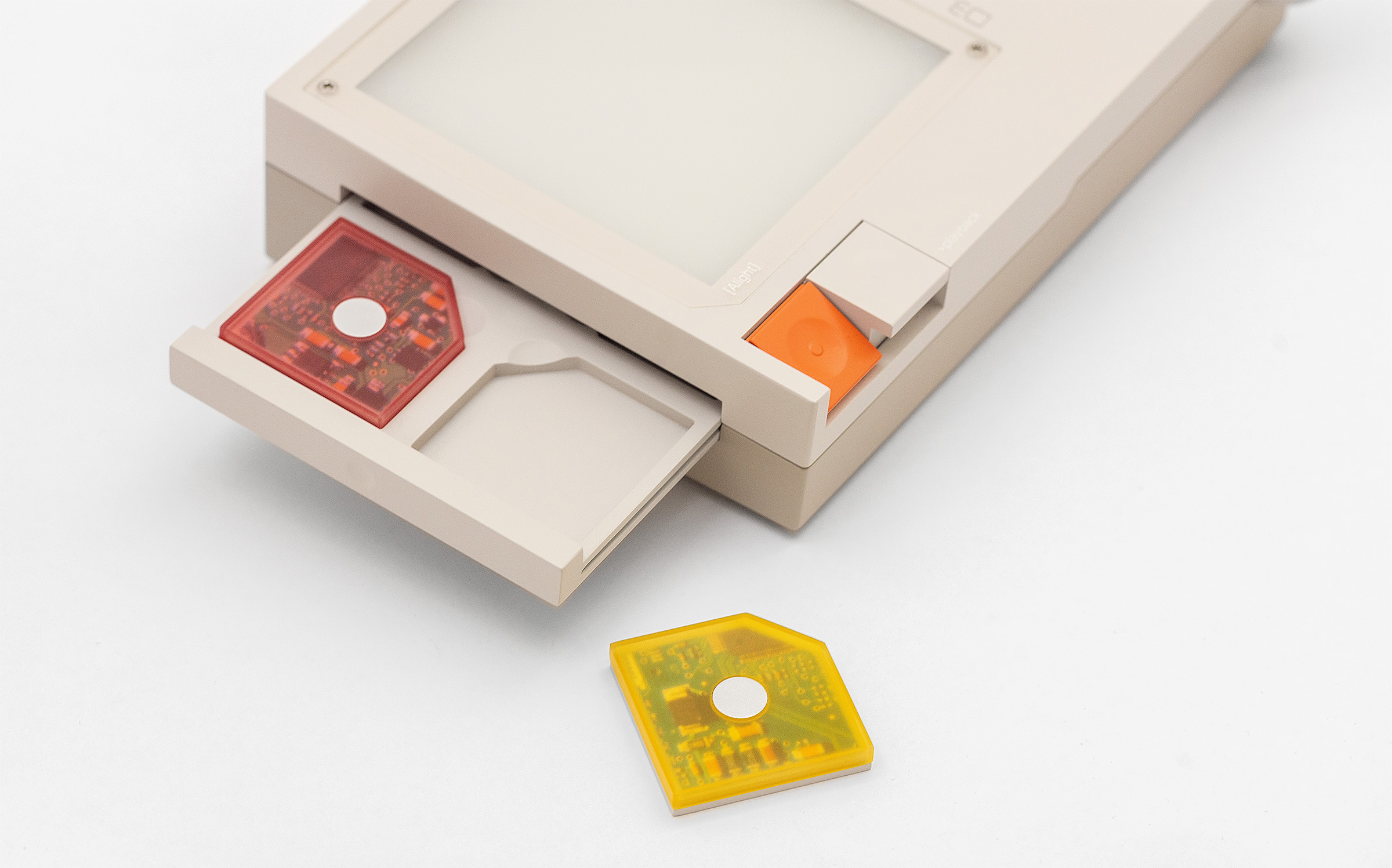
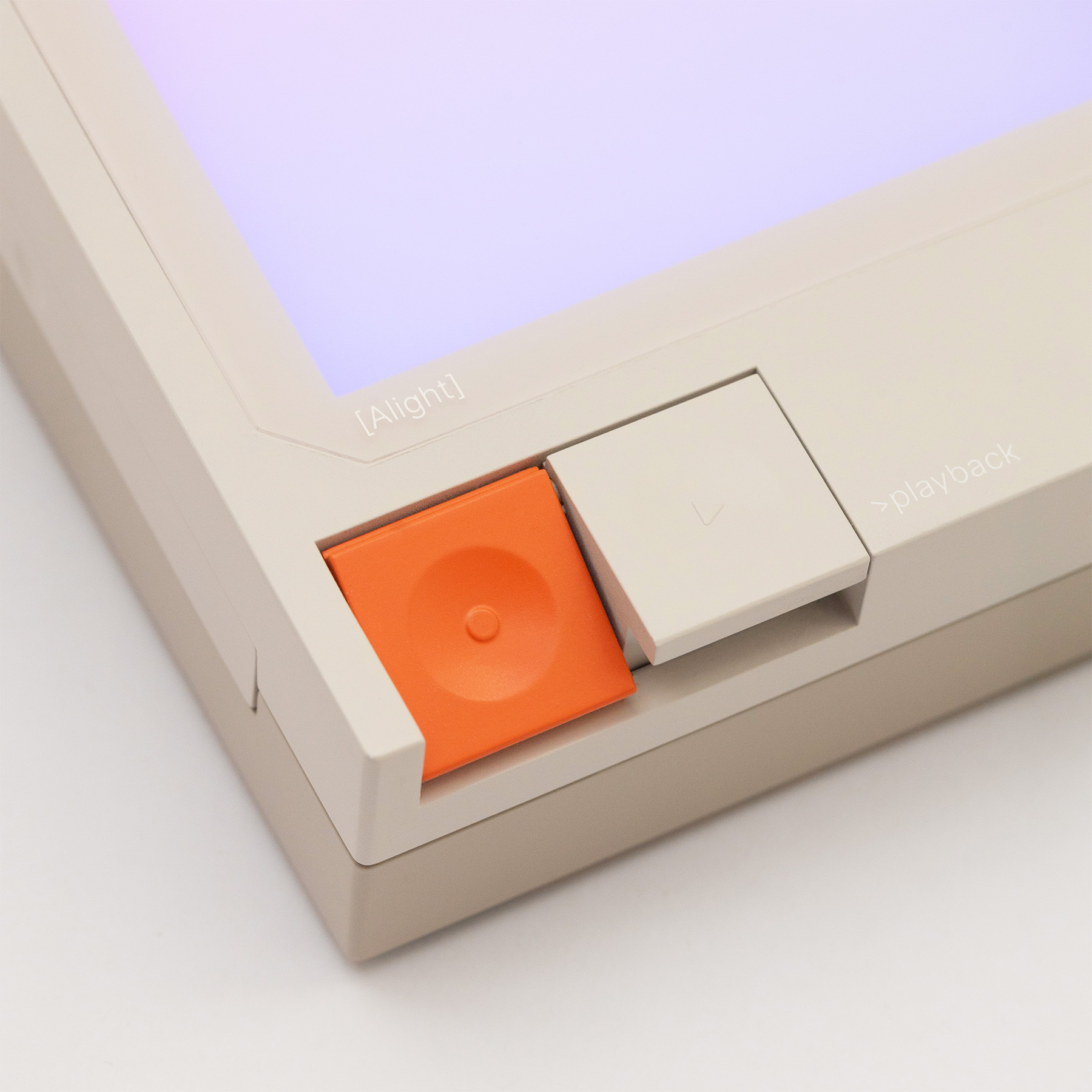
And when that conversation feels worth keeping, a single press of the record button captures it. All participants are notified. Nothing is stored without consent. Over time, those recordings accumulate into a living archive of the people who shaped us — capturing not just what they said, but the stories they told, the way they talked through a problem, how they met hardship, how they loved.
This isn’t a wholly new idea — it’s a more intimate version of one already taking shape. Storyfile lets people hold face-to-face conversations with recorded archives of historical figures, yet the most profound version of this technology will not be aimed at the famous or the historical. It will be the people sitting across from us at the kitchen table.
We are careful about what that is, and what it isn’t. A recording captures how someone spoke in the moments they chose to record - not the whole of how they thought. We are not claiming to bottle a person. What Alight builds is closer to what families have always kept: photographs, letters, a voice on an old tape. Only richer, and - with the help of AI - searchable.
Should that loved one pass, Alight remains, a private, offline archive built entirely from real conversations with an intelligent search function powered - a presence to return to in moments of grief or doubt or simply to get a reminder of who you are.
The questions worth sitting with
Designing in this space means taking the objections seriously rather than waving them away. The risks are real: that a “griefbot” replica risks interrupting healthy mourning rather than easing it; that people consult the dead instead of forming new relationships with the living; that a model could say something the person never would have; that someone’s likeness is used without their say.
These objections shaped the product rather than trailing behind it. Alight records only with everyone present and notified, never silently. Nothing is stored without consent. The model runs offline, on the device, owned by the family rather than a company - there is no engagement metric to optimise, no incentive to keep the bereaved coming back. And, most importantly, Alight is built first for connection while people are alive. The archive is a by-product of conversations actually had, not a substitute manufactured after the fact. That ordering is the whole ethical argument: it is a tool for being close now, that happens to leave something behind, rather than a tool for talking to the dead.
In a world of accelerating noise and disinformation, there is something quietly radical about grounding your sense of self in the most trusted source available, the voice of someone who knew you, and loved you, before the world got so seemingly complicated.

