Exploring wearables in the age of the digital self
TL;DR
The global biohacking market, valued at US$ 28.87 billion in 2023, is forecasted to reach US$ 242 billion by the end of 2033. This growth has been accelerated by technology, giving us new ways to measure what’s going on inside our bodies. Whilst this data has previously been inaccessible to the general consumer, brands like Zoe are taking this mainstream. With developments in gene sequencing combined with real-time information from blood pressure, glucose and lactate sensors, it won’t be long before we have a 360 holistic and real-time understanding of how our exercise, diet, sleep and emotions are affecting our health and longevity.
Real-time data
As Bryan Johnson, named the “Most Measured Man in Human History” has shown us, in order to change or ‘hack’ our body's response to certain stimuli, we first have to know what’s going on in there. The improvement in sensor technology will soon make it possible for in-ear headphones to measure vital signs like heart rate, temperature, and brain activity, and skin patches can monitor blood sugar and lactate levels. Together these data-sets form the basis of a digital twin; a digital version of ourselves that demonstrates how we react to certain stimuli.
Real life J.A.R.V.I.S
Combine this real time data with AI and it won’t be long before your personal AI assistant becomes your health and fitness coach, knowing your body better than you do and guiding your decisions on activity, rest, sleep, food and drink. Able to create workout plans and predict your progress 6,12 or 18 months ahead, this next level of machine learning and the developments in generative AI will be able to give you a visual representation of yourself in the future. Imagine the motivation of seeing yourself as you might look if you commit to your gym routine and the morning juice every day. Or challenging yourself against your digital twin that is showing you how hard you really could be (safely) pushing yourself.
MORRAMA INSIGHTS:
Lactate and blood sugar and brain activity monitoring will soon be combined with the existing temperature and heart rate sensors to enable a more complete picture of our bodies real-time reaction to stimuli in the form of a digital twin. Brands will combine this with generative AI to give us visual insights into how we might look if we were to follow a particular diet or training regime.
Wearables are both the key and the barrier
In order to collect the real time data, wearables are key. Currently, it's universally acceptable to have phones in our hands, smartwatches on our wrists and even an Airpod constantly hanging out of our ear; each pushing us information and keeping us constantly connected. Now the tech industry’s attention has moved to eyewear. Giving our ‘digital assistant’ access to what we see and in-turn being able to visualize data without reaching for our phone is the next step in augmenting our day-to-day. Whilst the technology still has some way to go if it’s to be small, powerful and accessible enough to be adopted mainstream, there is also the question of whether we are ever going to be prepared to walk around with something fixed to our face.
Our face is personal. For the majority of people, it’s on show all the time. We spend time each day looking at it, cleaning, grooming and putting makeup on it. It’s the reason we typically spend ages deciding on which pair of glasses to purchase. These decisions say something about us, and whether we admit it or not, we care what other people think. And there is a good reason for this. For humans, faces are among the most important visual stimuli in social situations. We have little reason to look at someone's wrist or hands when we are speaking to them, but it would be rude not to look at their face. With this in mind; the key to adoption of any mixed reality glasses is going to be size, comfort and expression.
MORRAMA INSIGHTS:
Wearables will be commonplace, not just during training sessions, but throughout the day, to ensure every meal, step and minute of sleep is accounted for. However this is reliant on them becoming lightweight and customizable for mainstream adoption.
Getting personal with our avatars
“Our work with fitness gaming brand Quell has taught us that fitness is only going to be drawing more inspiration from gaming. If we are to have a closer relationship with our digital selves, why wouldn’t we want to personalise them.”
We already have a digital self, a version of ourselves online that we tweak and curate to best showcase the aspects of ourselves we want to share. Given the opportunity to design our own digital twin, we may choose to shake off the human persona altogether and select the likeness of a bear or a fictional character. Because why not? If we are going to open ourselves up to the idea of living across the physical/digital divide, we may as well have some fun with it.
Issé
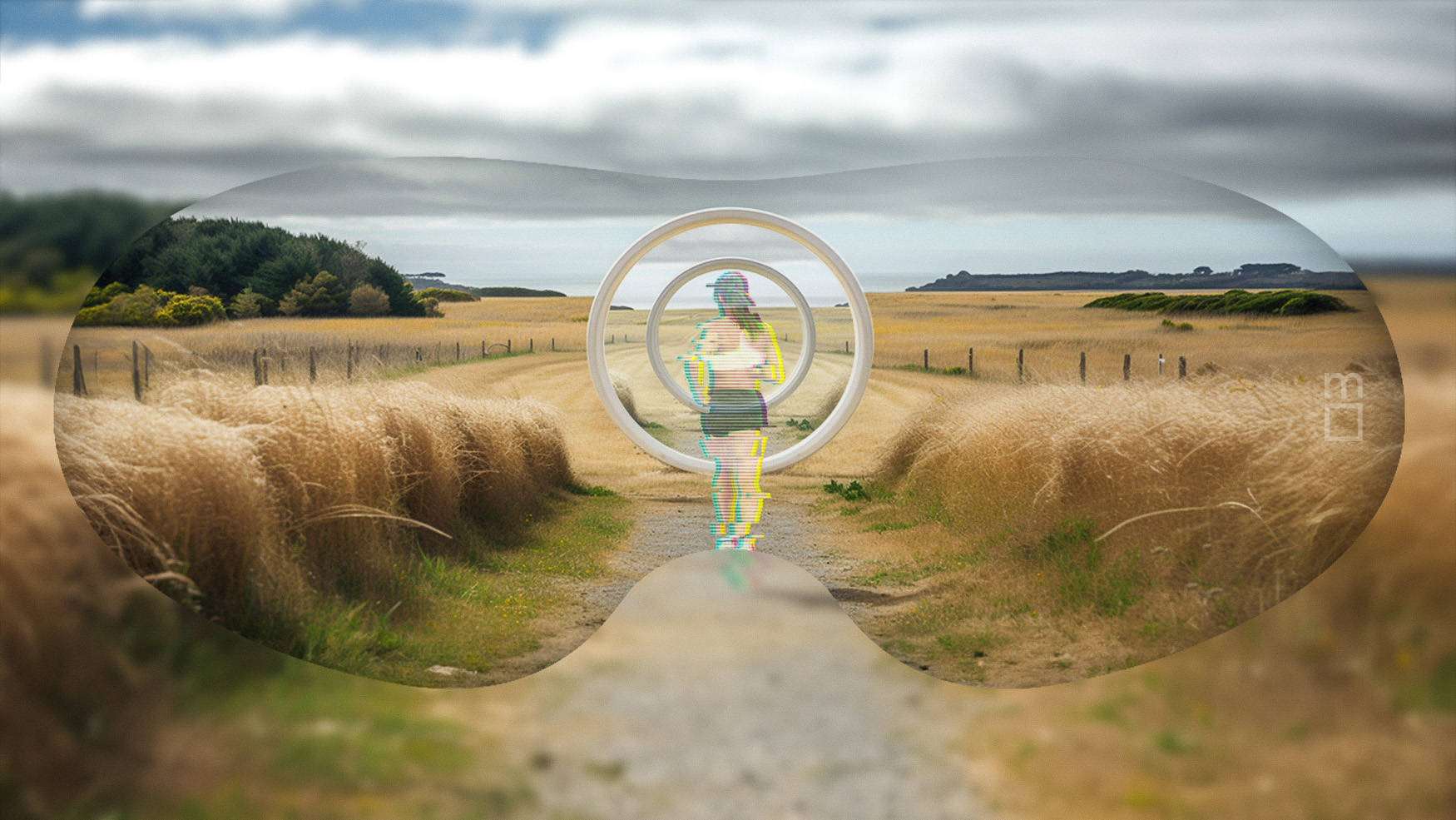
Based on these insights, the Morrama team have conceptualised a future-facing mixed reality wearable. A lens that can be customised based on preferences, requirements, and style by switching the technology out from frame to frame. Combining technology with fashion, Issé provides a solution for how we might adapt a face-worn wearable to our needs whether we are trail running or out lunching in the city.
Read more here
If you are interested in continuing this conversation, please get in touch at info@morrama.com.For our press pack, including high res images, please email: press@morrama.com.
The global biohacking market was valued at $28.87B in 2023 and is forecast to reach $242B by 2033 — roughly an eight-fold increase. Growth is driven by advances in sensor technology that allow consumers to measure what was previously only accessible in clinical settings: gene sequencing, blood glucose, lactate, brain activity, heart rate, and temperature. Brands like Zoe are bringing this data mainstream, and Bryan Johnson — dubbed "the most measured man in human history" — has popularised the idea that you can't optimise what you can't measure.
A digital twin is a real-time digital version of yourself, built from continuous biometric data captured by wearables — in-ear headphones measuring heart rate and brain activity, skin patches tracking blood sugar and lactate, smartwatches logging sleep and temperature. Combined with AI, this twin becomes a personal health coach that knows your body better than you do, predicting your physical state 6, 12, or 18 months ahead. Generative AI can then visualise how you'd look if you stuck to a training plan or, conversely, how hard you could safely push yourself by comparing against your twin.