The role of AI in the classroom
Raising children to connect with, and care for, the places they live
Morrama foresight
2026
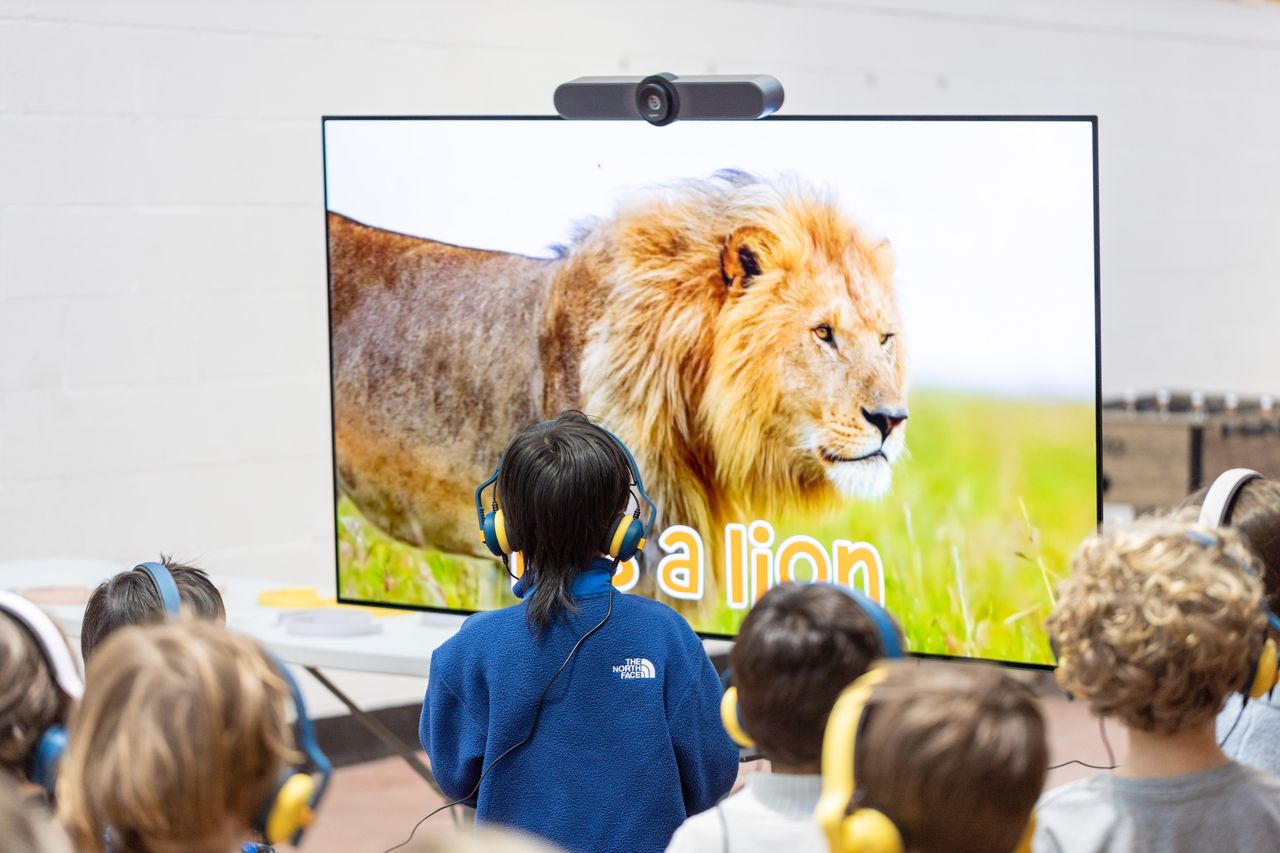

At Morrama, many of us have children not far off school age. Some see the integration of AI into the classroom as a far-off concern. Others are excited for it, seeing it as an opportunity to improve a system many believe to be broken. What our research has made clear to all of us is the risk of AI integration if we apply the same success metrics we always have - exam results, via the presumptious format - the screen. It also highlights the opportunity we miss for building a resilient generation who see the people in their communities as neighbours rather than strangers. A generation who care more for their local environment because knowledge and empowerment have given them agency.
Three thousand years ago there was no classroom. Education was inseparable from land, seasons, and ecology. You understood the world by being in it - exploring, experimenting and, above all, playing.
Children joined the hunting, foraging, tool-making, negotiating and caring for one another and learned from their elders. There was no grading on fire-starting technique. It was just a case of practising until you could keep a flame going.
In the absence of books, knowledge was transmitted through narrative: myths, experiments, moral dilemmas, history and humour. Storytelling, essentially. And in this way, children understood their relationship to everything else. Their role in the group, their responsibility to the land, and the idea that decisions were made with future generations in mind.
This evolved over centuries into something more like the classroom, but it was during the industrial revolution that schooling shifted significantly. There is a common misconception that education during this period was designed to prepare children, mostly boys for factory work. In reality, it was more often an effort simply to provide access to schooling. In the US, the early idea of "common schools" was born as much from a desire to break down social barriers and instil a shared national identity as it was from traditional ideas of education.
Over time, though, efficiency and standardisation crept in. We ended up with a national curriculum, rigid school schedules and standardised tests.
The arrival of the internet in the 90s radically decentralised information. Students were no longer limited to their school's library or the assigned textbook, removing the physical barriers to information that had, until then, defined learning. Teachers became less the "sage" and more the "facilitator" and "guide", supporting the development of critical thinking rather than the communication of information itself.
At the same time, a new vocabulary arrived - borderless markets, global citizens, international mobility, knowledge economies. Children were taught to think of themselves as part of a global village, but in doing so, were never encouraged to consider their real one. Geography was abstract, communities were conceptual, and children were left feeling responsible for the whole planet.
But you cannot meaningfully care for the planet if you've never been taught to care for a place.
Three decades on, two forces are converging in a way that lets us rethink this.
Sentiment, at least, is moving away from hyper-globalisation and toward nationalism. There are aspects of that shift worth resisting — but perhaps there's also something to capitalise on.
Not nationalism as an identity project, but localisation as a learning project. A chance to rediscover what early societies already knew: that children learn best when they feel connected — to land, to people, to purpose.
This idea isn't new. Laurie Lane-Zucker set up the Orion Society in the 1990s, having observed a world where places were trading local identity for homogeneity, community resilience was fraying, and ecological harm was accelerating. He coined the term Place-Based Education (PBE) to describe the approach they were taking: connecting learning to the physical and cultural places students inhabited, and pushing learning beyond the walls of the school — into community, history, ecology and lived experience.
Three decades later, Place-Based Education is gaining attention again. Last year a small rural primary school in Lamphun Province, northern Thailand, ran a ten-week place-based programme centred around hands-on activities designed to build not only students' understanding of their environment but also their emotional attachment to it — a kind of "I belong here, so I'll look after it" effect that globalised curricula struggle to achieve.
And it isn't only a child's connection to place that improves. The quality of education itself does too. Leaning on the wisdom of a community brings a richness and variety to a young person's development that no single teacher can match. Building an understanding of local industry enhances career awareness. Mixing with different age groups breaks down generational barriers.
So what's stopping this? Beyond the challenges of building — or in many cases rebuilding — connections between schools and their communities, this less formulaic form of education makes assessing a child's development harder. And assessment, more than almost anything else, is what keeps the current system in place.
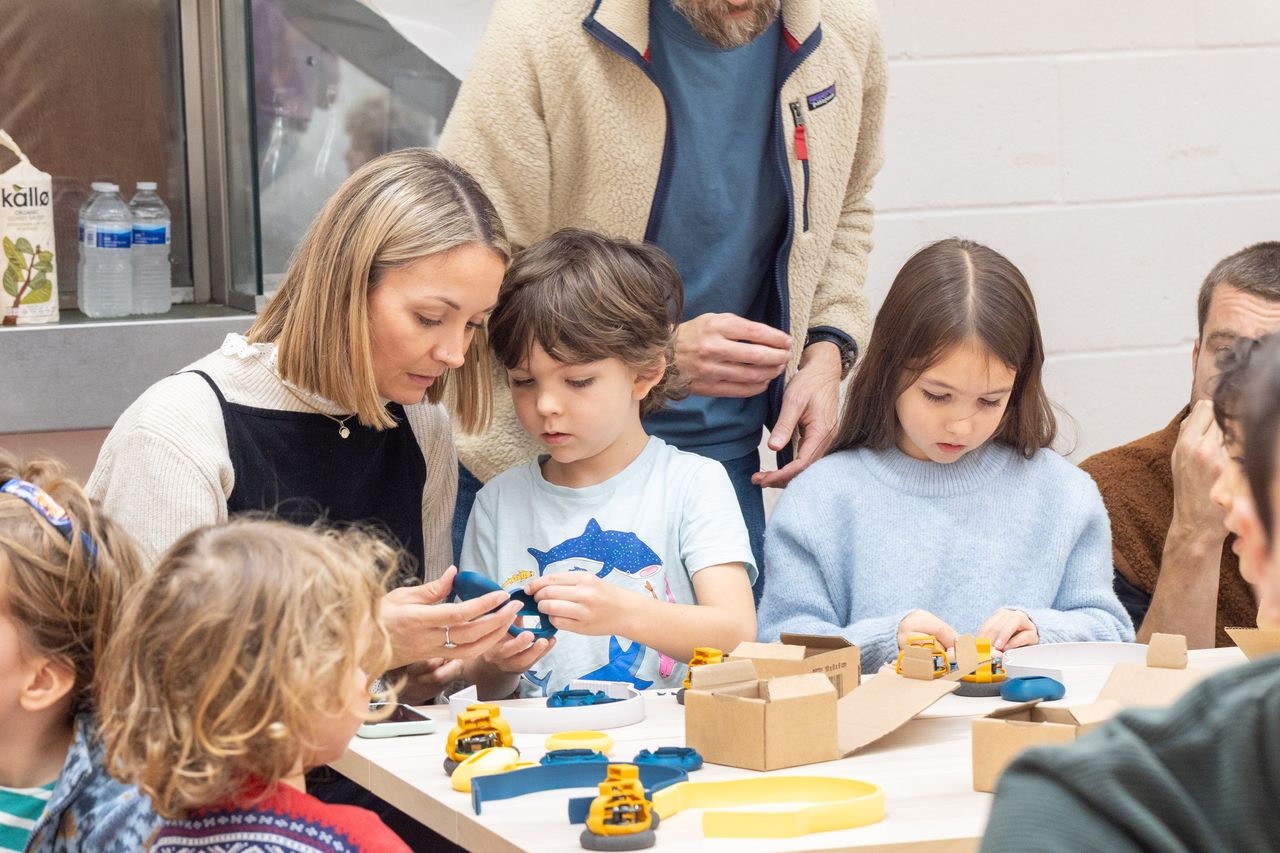
Which brings us to the second shift.
Large language models are already changing the way teachers teach, supporting them with writing lesson plans and setting assignments. They also have the potential to revolutionise assessment — monitoring a student's progress over time and feeding it into personalised feedback. An increasing number of schools are encouraging children themselves to use AI tools and chatbots, with some, such as Alpha School, putting it at the core of their approach.
But the default shape of AI-enabled education right now is a screen in a classroom. And that cannot go unchecked. Given free rein to use AI this way, students offload their thinking onto the technology, leading to the kind of cognitive decline more commonly associated with aging brains. Critical thinking skills decline. Opportunities for social development shrink. Children become vulnerable to digital attachment disorder, where manipulative AI models take advantage of the young mind to nurture dependency. Hyper-tailored, grade-focused learning creates silos — reducing group collaboration, the social friction that builds social skills, and play.
Through this lens, banning AI from the classroom altogether starts to look like the safer option.
But what if the problem isn't AI itself — it's the form we've assumed it has to take?
The default is a chatbot on a screen. That's a choice, not a given. There's another version where AI supports a return to contextual learning — grounding children in the places they live and the communities they belong to. How might an AI device give voice to the river, or explain the architectural style of a building? How might it inspire and facilitate curiosity to explore the world outdoors — something like Pokémon Go, or a real-life version of Ustwo's Alba: A Wildlife Adventure? How might it bridge the gap between stranger and ally on a street, or within a city?
These are the questions we think are worth asking. And they're design questions before they're technology ones.
We've been exploring the power of design to influence behaviour for almost a decade. Back in 2018, our Smarter Phones project explored how the physical design of a phone shapes how you interact with it. Presented to the Google design team, we proposed subtle hardware changes that would reduce screen time and the anxiety that comes with it. In 2023, our Mindful AI Tools project designed four playful objects that work together to strengthen a child's emotional and creative development at home.
This deep-dive into education is still at the research stage. We want to invite others to the table. If this resonates — or if it doesn't — get in touch at futures@morrama.com and help us shape the conversation.
Images from a local kids workshop that we ran in the Autumn of 2025 teaching kids how to build their own tech products.

